
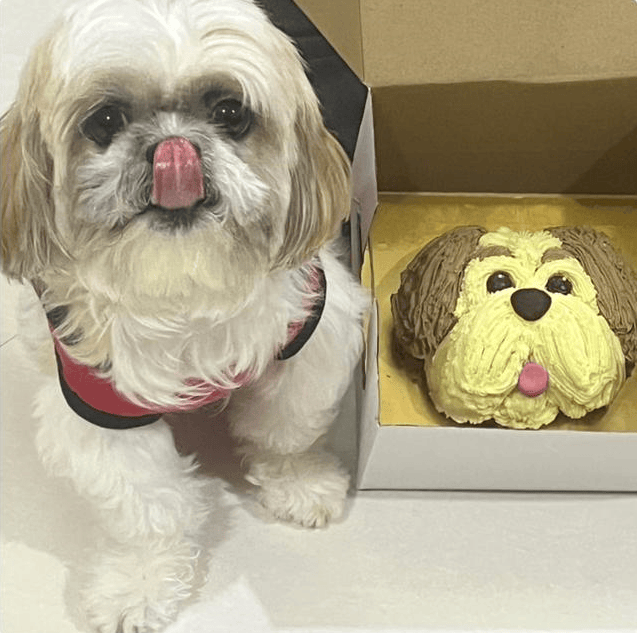
Understanding the ingredients, texture and thought that go into making a cake for your pet.
Have you ever cut into a birthday cake made especially for your pet and wondered why it doesn’t look quite like the soft, airy sponge cakes we’re used to enjoying?
Perhaps it’s a little denser, has a different crumb, or doesn’t have the same lightness as a cake from your favourite human bakery. And if you’ve ever found yourself wondering whether something is missing, you’re certainly not alone!
The truth is that a cake made for your pet isn’t simply a regular cake with the sugar taken out. The ingredients, their proportions and the way they behave during baking can all influence the final result. So, what exactly makes these cakes different? Let’s take a closer look.
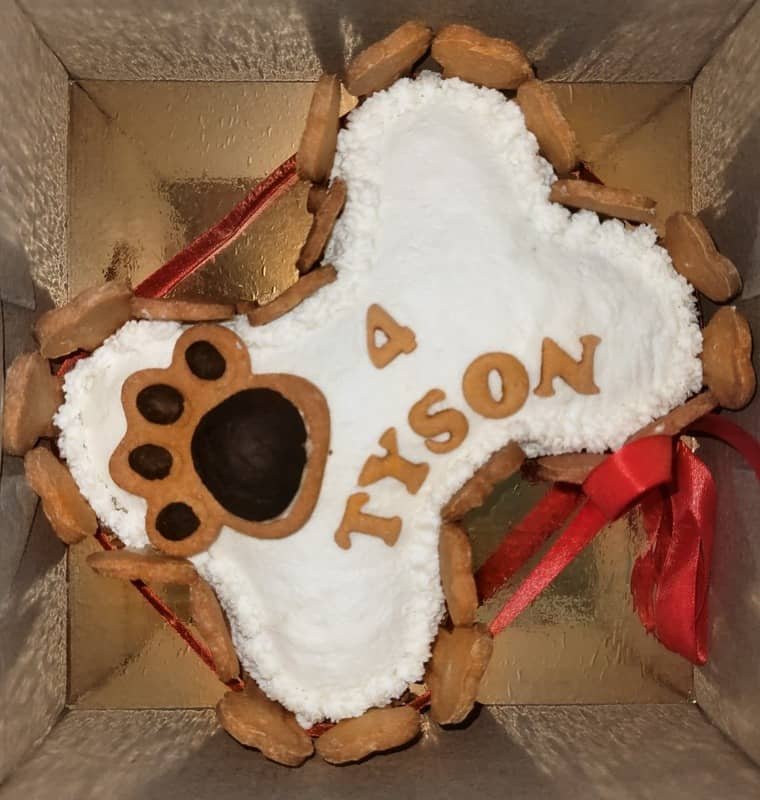
Every birthday cake has its own character, and pet cakes are no exception.
1. Different ingredients, different results
One of the biggest differences between conventional cakes and pet-friendly cakes lies in their formulation.
Traditional bakery cakes often use carefully balanced combinations of flour, sugar, butter or oil, eggs and raising agents. Together, these ingredients help create the familiar soft, tender and airy texture we associate with birthday cakes.
Pet-friendly recipes, on the other hand, may use a rather different combination of ingredients. Depending on the recipe, these could include rice flour, oats, eggs, chicken, fish, sweet potato, pumpkin or other ingredients selected for the intended formulation.
Each ingredient brings something different to the recipe. Flours provide structure, eggs help bind the ingredients, while vegetables and meat can influence moisture, density and texture. When the proportions and combinations change, the finished cake changes too. It’s simply a different kind of baking.
2. Why isn’t it as light and fluffy?
This is perhaps the most noticeable difference for many pet parents.
The soft, airy texture of a conventional sponge cake is the result of several things working together. The type of flour, the incorporation of air, the fat content, sugar, eggs and raising agents all play a role in determining how a cake rises and sets.
One important difference in our cake recipes is that we don’t use conventional chemical raising agents such as baking powder and baking soda.
These ingredients release gases during baking, helping a cake rise and develop a lighter, more open crumb. Without them, the cake relies more heavily on the structure created by its other ingredients and the air incorporated during preparation.
The result can be a more compact crumb rather than the familiar airy sponge texture.
Sugar also does more than add sweetness in conventional baking. It contributes to aeration, tenderness, moisture retention and the way a cake’s structure develops during baking.
When a recipe uses a different combination of ingredients and proportions, the resulting texture can be quite different. Some pet-friendly cakes have a soft, moist crumb, while others may be firmer or more compact. Neither appearance alone tells you whether a cake has been made well. What matters is whether the recipe has been thoughtfully formulated and properly baked for its intended purpose.
3. The ingredients make a difference to the crumb
Have you noticed that a chicken cake can feel quite different from a sweet potato or coconut cake?
That’s because ingredients don’t behave identically when baked.
Rice flour, for example, does not form the same gluten network as wheat flour. Oats have different starch and fibre characteristics, while ingredients such as pumpkin can contribute moisture and a softer consistency.
Meat-based recipes bring their own characteristics, too, influencing the overall structure and moisture of the finished cake. This is why you may find variations in the crumb, firmness and appearance across different flavours, even when the same baking process is followed.
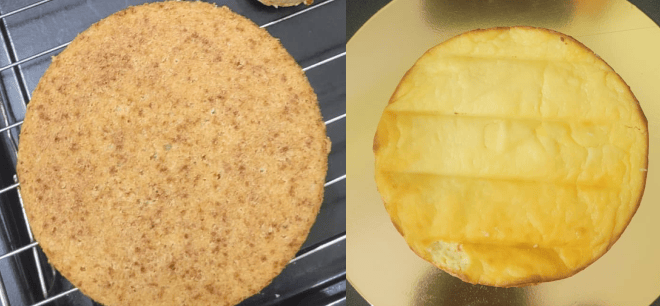
Different recipes, different finishes. The ingredients used in a cake influence its colour, surface, texture and overall appearance.
4. What about the frosting?
The frosting is another area where pet birthday cakes can look quite different from conventional celebration cakes.
Traditional buttercream often relies on butter and generous quantities of icing sugar to achieve its characteristic sweetness, smoothness and consistency.
Pet-friendly frosting requires a different approach. Its formulation depends on the ingredients selected, their suitability for the intended pet and the desired consistency.
Depending on the recipe and the pet’s individual requirements, frosting may include a small quantity of honey or be prepared without it altogether. Known allergies, dietary sensitivities and individual preferences can all influence the final formulation.
As a result, pet cake frosting may have a different finish, firmness or appearance from conventional buttercream. It may also behave differently when refrigerated or left at room temperature. A beautifully finished cake doesn’t necessarily need a thick layer of traditional buttercream. The aim is to create an appealing finish using ingredients appropriate for the recipe.
5. What should you look for when choosing a cake for your pet?
Now that we’ve established why pet cakes can look and feel different, what should you actually consider when choosing one?
Here are a few things worth paying attention to:
Know what’s going into the cake. Look for transparent ingredient information. You should be able to understand what your pet is eating rather than relying on vague descriptions.
Consider your pet’s preferences. Choose a flavour they already enjoy, especially if this is their first birthday cake.
Check for dietary sensitivities. If your pet has known allergies, intolerances or an underlying health condition, discuss the ingredients with your veterinarian before ordering.
Think about portions. A cake is a celebratory treat, not a replacement for a balanced everyday diet. Consider your pet’s size, usual food intake and how much cake you intend to serve.
Follow storage instructions. Freshly prepared cakes have specific storage and handling requirements. Make sure you understand how to refrigerate and serve them safely. And perhaps most importantly, don’t judge a pet cake solely by how closely it resembles a human birthday cake. Its appearance and texture need to be considered in the context of its ingredients and intended use.
A different kind of cake, for a very special member of the family
Birthdays are about making memories, and our pets deserve to be part of those moments too.
A pet birthday cake may not have the same airy sponge, elaborate buttercream or sweetness as the cake on our own celebration table. But that doesn’t make the occasion any less special.
At Pawradise Pet Bakery, we believe that creating something for pets begins with thinking about the ingredients, the little details and the experience we’re hoping to create. Our cakes are handcrafted in small batches, with recipes and decorations thoughtfully designed for pet celebrations.
Because celebrating them isn’t about giving them a version of what we enjoy. It’s about making something with them in mind. And really, that’s what makes their birthday cake special.
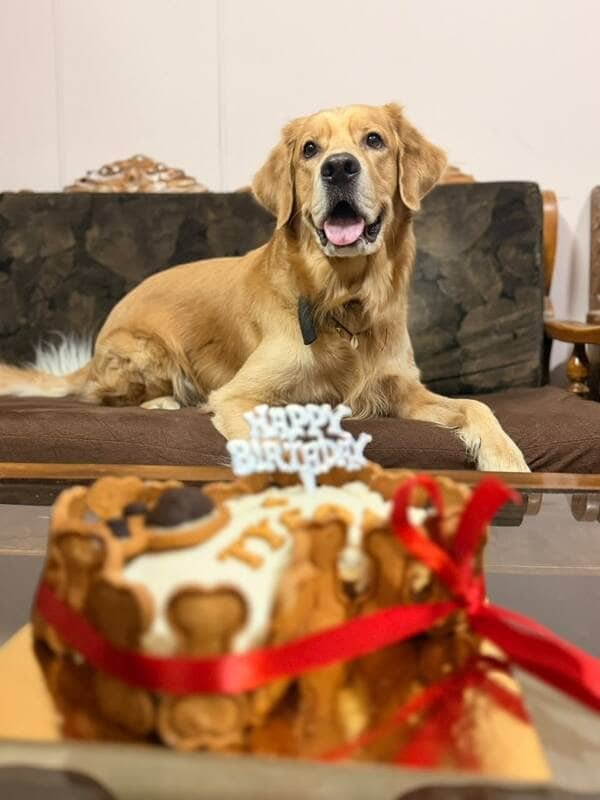
Here’s to more birthdays, more happy moments and many more reasons to celebrate the ones who make our lives a little brighter.
Have a special occasion coming up, or simply want to make an ordinary day a little more special? Explore our handcrafted pet cakes and find a flavour they’ll love.